


Last updated: August 5, 2025
Reading time: ± 8 minutes
TL;DR 🧪🍬 (40 words)
Monohydrate remains the gold standard (best evidence, best price/gram). HCl dissolves faster and may be milder on the stomach for some, but does not provide proven additional muscle gain. Choose 3–5 g/day and focus on daily consistency.
Why this comparison?
Creatine gummies are hugely popular. Manufacturers now offer both creatine monohydrate and creatine HCl variants. But which do you choose? Below you will find the evidence, practical experience, and a clear selection guide – tailored to gummies.
Quick Comparison – Monohydrate vs HCl in gummies
| Property | Monohydrate gummy | HCl gummy |
|---|---|---|
| Effectiveness (strength/muscle) | ⭐⭐⭐⭐✪ – hundreds of RCTs support gains | ⭐⭐⭐⭐ – fewer RCTs; no structural advantage over monohydrate |
| Dosage | 3–5 g/day | 2–3 g/day equivalent creatine base specified by manufacturer |
| Stomach comfort | Good; sometimes cramps if > 5 g at once | Often slightly milder due to higher solubility |
| Solubility | Lower (in water) but irrelevant in gummies | High (acidic), rapid dispersion |
| Price/gram creatine | Lowest | Higher |
| Evidence base | Large, long-term | Smaller set, emerging |
Takeaway: HCl may feel somewhat more comfortable, but monohydrate offers the best value and strongest evidence – especially in gummies where solubility is less critical.

How do they work? (brief chemistry)
-
Monohydrate is creatine + water molecule; stable, cheap, excellently researched.
-
HCl (creatine hydrochloride) is more acidic → higher solubility in liquid and potentially lower required dose to achieve the same intramuscular creatine increase. In gummies, the difference is mainly noticeable as stomach comfort.
Intake advice for both variants
| Body weight | Monohydrate | HCl | Water |
| < 60 kg | 3 g/day | 2 g/day | 300 ml |
| 60–90 kg | 4 g/day | 2.5–3 g/day | 400 ml |
| > 90 kg | 5 g/day | 3 g/day | 500 ml |
-
Training day: take after your session with carbs/protein.
-
Rest day: with your largest meal.
-
Loading phase? Not necessary for gummies; taking it daily works just as well over several weeks.
See also: Dosage per weight and Rest day guide.
Frequently asked claims fact-checked
“HCl causes no water retention.”
Incorrect: every type of creatine increases intracellular water in muscle. That is functional, not fat.
“HCl works with fewer grams, so it's more powerful.”
Not proven for muscle gain; lower grams are primarily related to solubility and tolerance, not additional effect.
“Monohydrate is outdated.”
No: it is still the benchmark against which new forms are compared.
Selection guide (practical)
-
Budget / maximum evidence → Monohydrate gummies.
-
Sensitive stomach / reflux → try HCl gummies (start with 2 g with a meal).
-
Cut/Keto → choose sugar-free variant, regardless of type.
-
Women < 55 kg → 2–3 g/day is often sufficient (see Women’s guide).
-
Vegan → check pectin binder and V-label (see Vegan guide).
Conclusion
For most athletes, creatine monohydrate gummies are the logical choice: affordable, proven, and effective. Creatine HCl gummies can offer a solution for stomach sensitivity, but provide no additional muscle gain. What matters most: taking your dose every day.
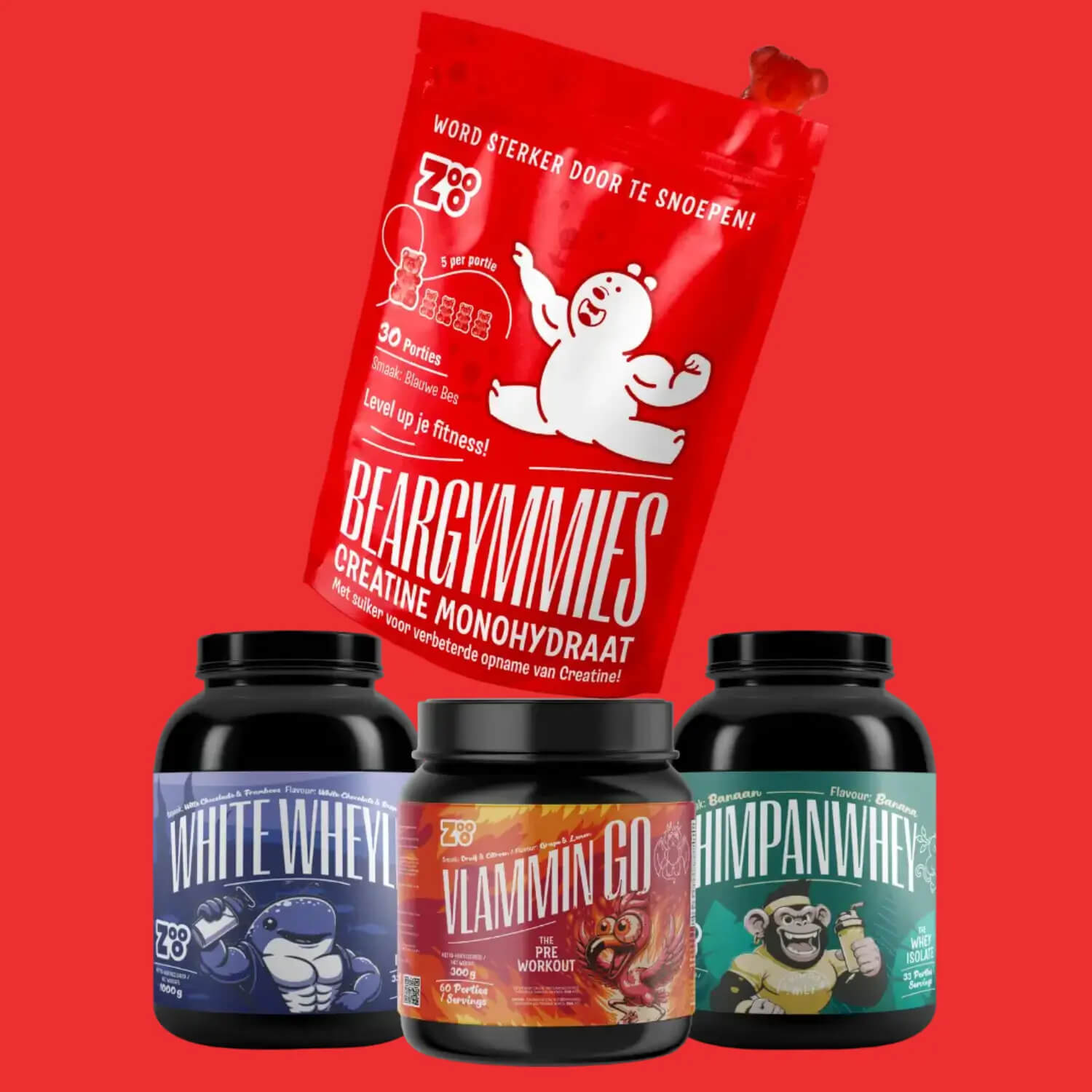
Shop smart: Zooo Nutrition Creatine Gummies – code BlOG10
Sources
-
JISSN Position Stand Creatine, 2021–2024 updates.
-
Sports Medicine – creatine forms review, 2023.
-
EFSA – creatine safety, 2024.


