


Split-step, glass rebound & tie-break — where games are decided.
TL;DR (≤60 words)
Padel is repeated short bursts: split-step, 2–5 m sprint, brake/reverse, net duel. Creatine supports the ATP-PCr system: more punch, faster recovery between rally bursts, and less decay in the tie-break. Take 3–5 g daily. Early +0.5–1.0 kg is often intramuscular (performance-friendly).
────────────────────────────────────────────────────────────────────
WHY THIS MATTERS
Every rally requires explosiveness and change of direction: serve-return, glass rebound → short sprint, net point, defending a lob. These are 0–10 s efforts — ATP-PCr-dominant. With creatine, you increase the phosphocreatine buffer and maintain quality in set 2/3 and the match tie-break.
────────────────────────────────────────────────────────────────────
HOW IT WORKS (SHORT & CLEAR)
-
ATP-PCr provides energy for start/stop, cuts, and short sprints.
-
Creatine ↑ PCr resynthesis → longer maximum effort in short actions and faster recovery between repetitions.
-
In practice: faster first step, more powerful volley/overhead after sprint, and consistent intensity at the end.
────────────────────────────────────────────────────────────────────
PRACTICAL PER PHASE OF PLAY
Serve & first two shots
-
Benefit: explosive first-step after serve/return, immediate net dominance.
-
Drill (2×/week): 10× (15 s serve → split-step → net) / 75–90 s. Focus: low hips, one explosive step.
Glass rebounds & defense
-
Benefit: wall-read → short sprint to ideal position.
-
Drill (2×/week): 3 blocks of 6′: 20 s random wall cues (coach/partner points), 40 s easy. Goal: footwork-precision.
Net duels & tie-breaks
-
Benefit: volley quality after micro-sprint, last points under fatigue.
-
Drill (1–2×/week): 8–12× (12–15 s micro-sprint → 2 volleys/1 bandeja) / 90 s. Last 2 repetitions = quality check.

────────────────────────────────────────────────────────────────────
DOSAGE, TIMING & HYDRATION
Dosage
-
3–5 g/day creatine monohydrate; loading phase not needed.
-
Split-dosing for GI sensitivity: 2–3 g + 2–3 g with meals.
Timing
-
Choose the moment you can maintain. After training with the first larger meal is practical; in the evening is also fine (creatine is not a stimulant).
Hydration & electrolytes
-
Indoor/summer: plan fixed drinking moments; with heavy sweating: sodium, magnesium, potassium (neuromuscular function, cramp prevention).
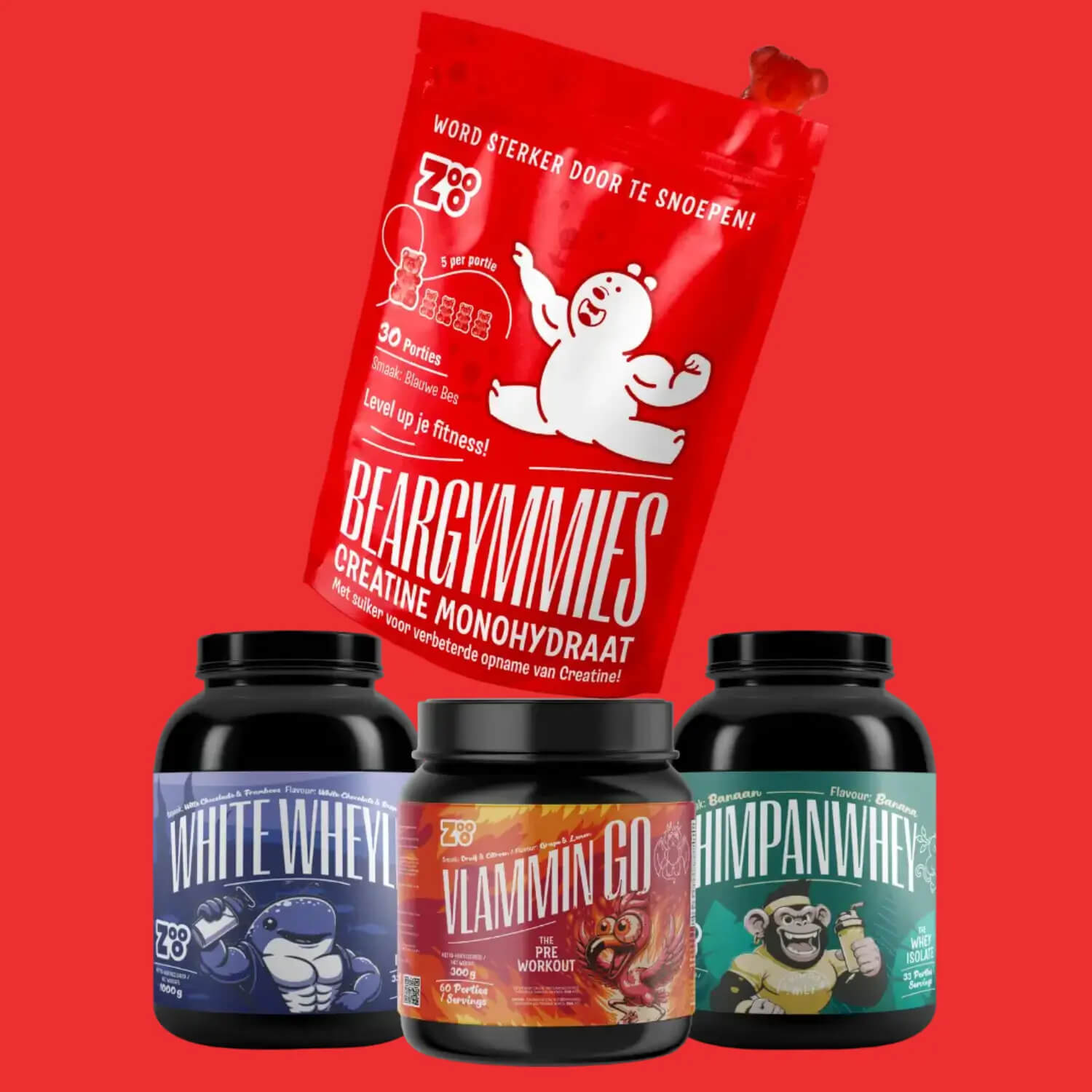
Beargymmies®
-
1,000 mg per gummy → 5 gummies = 5 g/day (150 gummies/bag).
-
Original (blueberry) or Performance+ (sugar-free) with taurine, magnesium, potassium — ideal for high volumes or hot courts.
Our gummies:
• Original: https://www.zooonutrition.com/products/creatine-monohydraat-gummie-beertjes-beargymmies
• Performance+ (sugar-free): https://www.zooonutrition.com/products/suikervrij-beargymmies-performance-plus-creatine-gummies-vegan
────────────────────────────────────────────────────────────────────
EXAMPLE WEEKS (2–4 WEEKS)
A) Explosiveness & net dominance
-
Mon: Footwork blocks 3×6′ (20 s on / 40 s easy) + 8×12 s cone micro-sprints / 90 s
-
Wed: Strength 45–55′ (trap-bar deadlift 3×5; Bulgarian split squat 3×8/leg; RDL 3×6–8; landmine press 3×8; core anti-rotation 3×12)
-
Sat: Matchplay: 3× tie-break simulations with short breaks
B) Tie-break quality
-
Tue: RSA 3 blocks → each 6× (20 s hard / 40 s easy) (shuffle + short sprint + brake)
-
Thu: Over-unders 6× (1′ hard / 1′ easy) + reaction volleys 6× (15 s) / 60–75 s
-
Sun: Mobility/recovery 30′
Daily: 3–5 g creatine + 1.6–2.2 g/kg/day protein.
────────────────────────────────────────────────────────────────────
DO’S & DON’TS (CHECKLIST)
DO’S
• 3–5 g/day (including rest days)
• Combine with meal or evening routine
• Split-dosing for GI sensitivity
• Protein 1.6–2.2 g/kg/day + electrolytes in heat/indoor
• Test adjustments outside of tournaments
DON’TS
• Only take on match days
• Prioritize timing over consistency
• Loading phase right before a tournament
• Test new stack on game day
• Ignore thirst signal → cramps/loss of quality
────────────────────────────────────────────────────────────────────
FREQUENTLY ASKED QUESTIONS (FAQ)
Does creatine make me heavier and slower?
Early +0.5–1.0 kg is often intramuscular (water/glycogen) and typically performance-friendly. Test outside of A-matches.
Does creatine help with net duels and glass rebounds?
Yes, precisely with short bursts and direction changes.
Is a loading phase needed?
Not needed. 3–5 g/day saturates in 2–4 weeks.
Is creatine safe?
For healthy adults and normal dosages: yes. Consult a doctor for conditions/medication.
Is evening intake okay?
Yes, creatine is not a stimulant.
What if I have GI issues?
Take with/after a meal or use split-dosing.
Does it work on rest days?
Yes. Daily intake maintains the PCr pool.
Which form do I choose?
Monohydrate — strongest evidence and best €/5 g.
When will I notice the effect?
Often within 2–4 weeks; pay attention to quality in tie-breaks.
Which Beargymmies® do I choose?
Original or Performance+ (sugar-free); 5 gummies = 5 g/day.
────────────────────────────────────────────────────────────────────
CONCLUSION + CTA
Padel is decided on split-step, glass rebound, and the final points. Creatine helps precisely there. With 3–5 g daily, targeted footwork/RSA stimuli, and smart hydration, you play more consistently when it counts.
Make it simple with 5 Beargymmies® per day — choose Original or Performance+ (sugar-free).
────────────────────────────────────────────────────────────────────
Sources
-
Kreider, R. B., et al. (2017). ISSN Position Stand: Safety & efficacy of creatine. J Int Soc Sports Nutr 14:18. https://doi.org/10.1186/s12970-017-0173-z
-
Antonio, J., et al. (2021). Common questions & misconceptions about creatine. J Int Soc Sports Nutr 18:13. https://doi.org/10.1186/s12970-021-00412-w
-
Jäger, R., et al. (2017). ISSN Position Stand: Nutrient timing. J Int Soc Sports Nutr 14:33. https://doi.org/10.1186/s12970-017-0189-3
-
EFSA Panel (2011). Health claim: creatine ≥3 g/day improves performance in short, high-intensity. EFSA Journal 9(7):2303. https://doi.org/10.2903/j.efsa.2011.2303
-
Bishop, D. (2010). An applied research model for the sport sciences (recovery between repetitions). Sports Medicine 40(1):65–78. https://doi.org/10.2165/11319760-000000000-00000


