


TL;DR
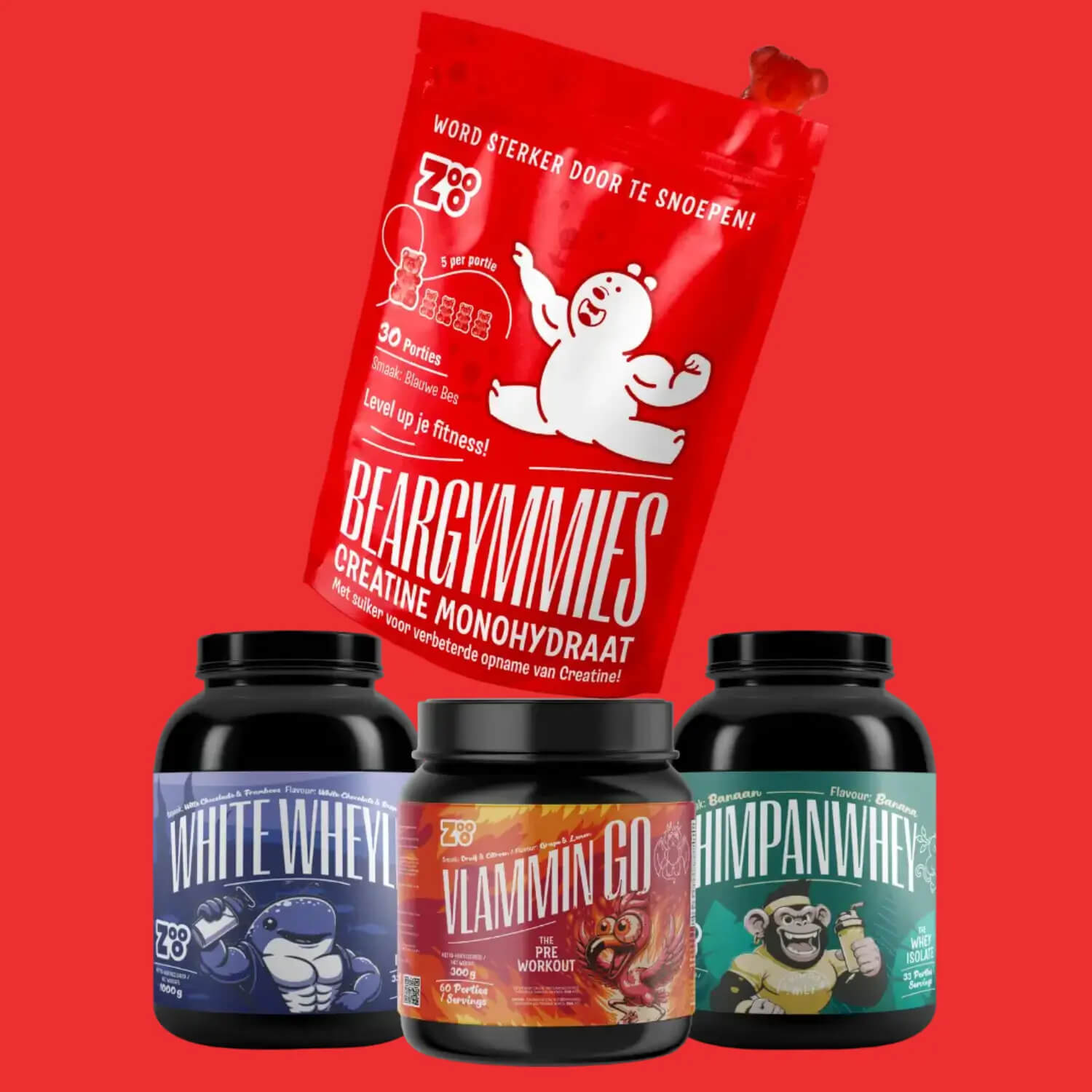
Creatine can increase the scale by +0.5–1.0 kg due to intramuscular fluid and increased muscle glycogen—which is not fat. It improves strength, repetitions, and recovery. 3–5 g/day is safe. Consistency > timing. Choose a form you take daily (Beargymmies®).
Intro
"Does creatine make me fat?" is perhaps the #1 doubt. The scale sometimes rises after 1–3 weeks, leading athletes to think creatine adds fat. In this guide, you'll learn why your weight increases, which mistakes to avoid, and how to use creatine safely and smartly for improved performance, without unnecessary stress about the number on the scale.
What is creatine and how does weight gain work with it?
Creatine, together with phosphate, forms phosphocreatine, a rapid energy system (ATP) for short, intense efforts. When supplementing, your muscle's creatine and phosphocreatine pool fills up. This has two direct effects that can change weight:
-
Intramuscular fluid (cellular hydration)
Creatine draws water into the muscle cell. This increases cell volume and is actually anabolic-friendly: it promotes training quality and potentially muscle growth. -
More muscle glycogen
Better trained = more glycogen. Each gram of glycogen binds ~3 g of water in the muscle. Result: slightly higher body weight, but primarily functional (muscle + performance), not fat.
Important: this fluid is in the muscle, not "subcutaneously bloated". So you don't look "puffy"; in fact, you often perform better. (also read whether you should load creatine here)
What does science say?
-
Safe & effective: the ISSN position stand (2017) designates creatine monohydrate as safe and effective for healthy individuals. No harmful effects on kidneys/liver at common dosages.
-
Scale vs. body composition: weight can increase due to intracellular fluid and more lean mass with strength training; this is not an increase in fat mass.
-
Consistency > timing: studies show that daily use is more important than the exact timing (before/after training).
-
EFSA safety: EFSA acknowledges the safety from ≥3 g/day of high-purity creatine.
(Full sources at the bottom.)
Practical: how to apply it smartly?
Dosage
-
Daily 3–5 g creatine monohydrate.
-
No loading phase needed. If you want faster effects, loading (20 g/day, 5–7 days) is possible, but not necessary.
Beargymmies®: 1,000 mg per gummy → 5 gummies/day = 5 g (150 gummies/bag).
-
Performance+ (sugar-free): creatine + taurine, magnesium, potassium — ideal for heavy sweating, WODs, and summer workouts.
Timing
-
Choose a fixed time (morning/after training/before bed). Consistency always trumps timing.
Hydration & nutrition
-
Drink normally (thirst-driven). In high heat/sweating → electrolytes (Performance+). (read here our blog on how much you should drink)
-
Protein in order (1.6–2.2 g/kg/day) and keep progressively overloading.
How much weight gain is normal?
-
0.5–1.0 kg in the first 2–4 weeks is common.
-
Strength athletes with a loading phase sometimes see 1–2 kg earlier, due to rapid volume increase.
-
No panic: this is performance-fluid and/or muscle, not fat.
Examples & scenarios
Beginner athlete (m/f):
-
Start 3–5 g/day; expect some weight ↑ in 2–4 weeks due to fluid in the muscle → focus on strength progression (repetition +1, weight +2.5 kg).
Cutting / fat loss:
-
Creatine fits well into a cut. It helps maintain strength. You may temporarily appear slightly heavier on the scale, while mirror/measurements improve.
Endurance athlete/runner:
-
Expect small weight ↑. Still, creatine can be useful for sprints, hills, final sprints, and recovery. Test 3–5 g/day, assess feeling on paces.
Do’s & Don’ts (checklist)
Do’s
-
Take 3–5 g every day (5 gummies).
-
Measure mirror, circumference, and strength, not just weight.
-
Combine with strength training 2–3×/week.
-
Keep hydration and protein in order.
-
Choose a form that you can stick with (Beargymmies® → consistency).
Don’ts
-
Don't stop at +0.5–1.0 kg in week 2–3 — that is intramuscular fluid.
-
No yo-yo dosing: skipping → effect fades.
-
Don't just rely on "claims"; look at mg/5g, CoA and purity.
-
No panic about "bloated" look — the fluid is in the muscle.

Conclusion
Creatine does not cause fat gain. The slight weight gain is mainly due to muscle hydration and more glycogen—exactly what helps your performance. Want results? Take 3–5 g/day, train strength 2–3× per week, and make it easy with Beargymmies®.
CTA: Start today with 5 gummies per day: choose Original or Performance+ (sugar-free).
Sources
Kreider RB, et al. (2017). ISSN position stand: Safety and efficacy of creatine supplementation. J Int Soc Sports Nutr 14:18. https://doi.org/10.1186/s12970-017-0173-zCooper R, et al. (2012). Creatine supplementation with specific view to exercise/sports performance. J Int Soc Sports Nutr 9:33. https://doi.org/10.1186/1550-2783-9-33
Candow DG, et al. (2019). Effects of creatine with resistance training on aging muscle. Nutrients 11(7):1509. https://doi.org/10.3390/nu11071509
EFSA (2004). Opinion of the Scientific Panel on Food Additives on Creatine Monohydrate. https://efsa.onlinelibrary.wiley.com/doi/10.2903/j.efsa.2004.36
Smith-Ryan AE, et al. (2021). Creatine supplementation in women’s health. Nutrients 13(3):877. https://doi.org/10.3390/nu13030877


