


Introduction
Around 20-30% of your daily fluid intake doesn't come from your water bottle, but directly from your plate.² However, most athletes don't know which foods truly count as "edible water sources." In this article, you'll see at a glance the water content of bread, cheese, fruits, and vegetables – plus a sample menu that can easily provide an extra 1 liter of fluid. Combine these tips with our guide Creatine & Water: do you need to drink extra? for a complete summer plan.
1. How much fluid do you get from food on average?
-
EFSA guideline: 70-80% of your fluid needs come from drinks, 20-30% from food.²
-
With a recommended intake of 2.5 L (men) or 2.0 L (women), that's ± 500-700 ml from food.
-
Hot days & exercise ✔️ → goal ≈ 3 L total, of which ± 600-800 ml from food.
2. Top products: water percentages at a glance
| Food Item | Water Content* | Why it helps | Source |
|---|---|---|---|
| Cucumber | 90-97 % | almost zero kcal, delicious in salads | Quest |
| Lettuce | 96 % | topping for bread or wraps | Puur Gezond |
| Watermelon | 92 % | hydration + potassium & lycopene | utswmed.org |
| Tomato | 94-96 % | also contains vitamin C & potassium | Puur Gezond |
| Bread (white) | 36-40 % | staple of Dutch lunch, secretly counts | cerealsgrains.org |
| Gouda cheese (48+) | 37-40 % | sodium & calcium | FNZ Kaas |
| Chicken fillet** | 70 % | moisture + protein for recovery | KRO-NCRV |
* Average raw values; slight variation per source/variety.
** Unprocessed chicken; "injected" catering fillet can contain even > 30% extra water.
Infographic for a quick scan
3. Daily menu – how it adds up unnoticed
| Meal | Component | Water (ml) |
|---|---|---|
| Breakfast | 2 slices of bread (70 g) + slice of cheese (30 g) | ± 40 |
| Snack | Bowl of watermelon (200 g) | ± 180 |
| Lunch | Whole wheat wrap with 60 g cucumber & lettuce | ± 60 |
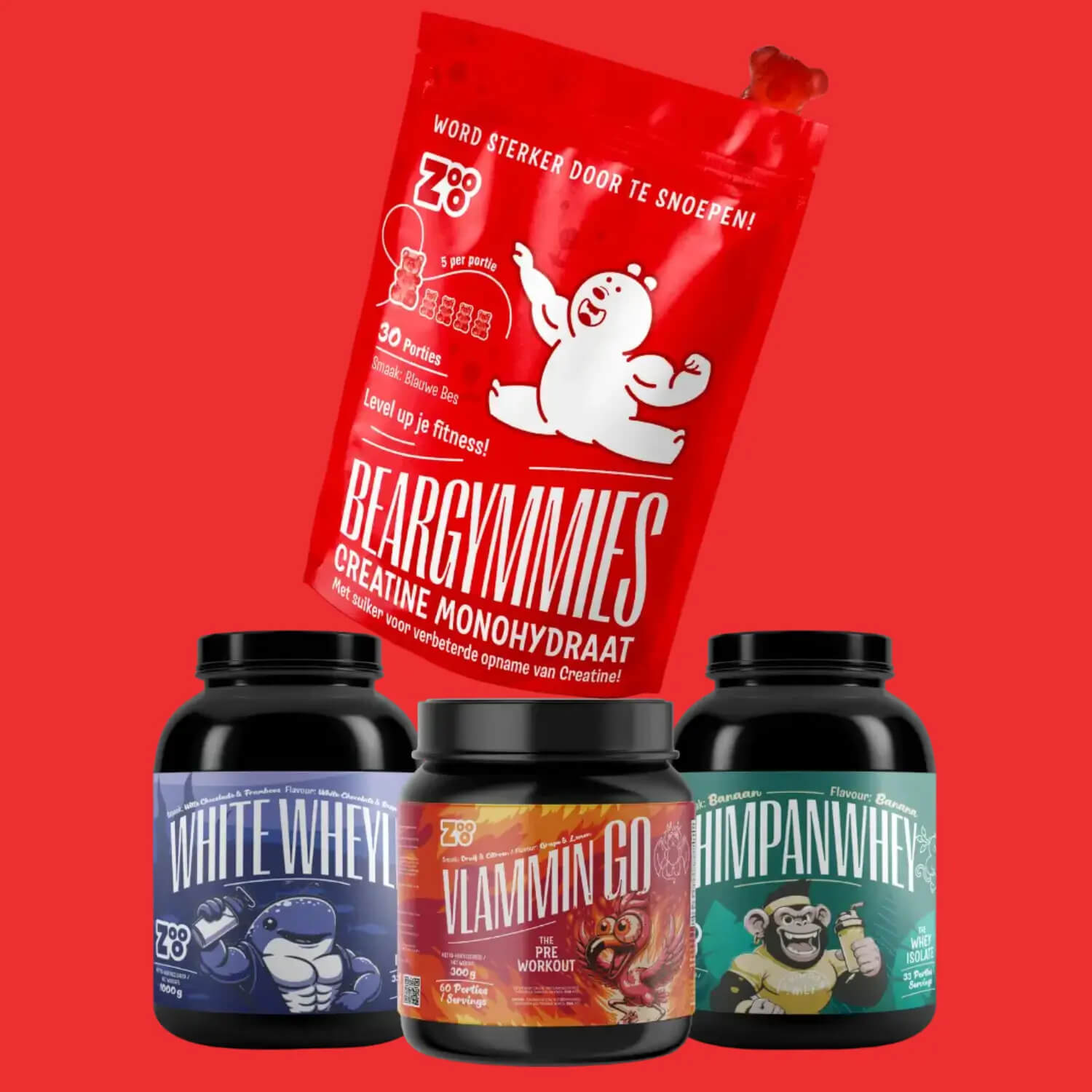
| Pre-workout | 1 Beargymmies shake with 250 ml water | 250 |
| Dinner | Chicken fillet 150 g + 150 g tomato/cucumber salad | ± 180 |
| Total from food | ≈ 710 ml |
Add 2 L of drinks and you'll easily reach 2.7 L.
4. Hydration tips for hot days
-
Fill each meal with > 100 g of water-rich fruit or vegetables.
-
Snack smart: choose watermelon or cucumber with hummus instead of chips.
-
Combine electrolytes (HydraBear) with Beargymmies for optimal fluid retention.
-
Watch your sodium intake: if you sweat a lot, add 0.5-1 g of salt per liter of water.
-
Check your urine color: light yellow = great, dark = rehydrate.
5. FAQ
Does coffee or tea also count?
Yes, all drinks hydrate; the diuretic effect of caffeine is minimal.
Can I overhydrate through food?
Only with extremely high water consumption (> 6 L/day) AND sodium deficiency; food rarely contributes to this.
Is moisture from bread "healthy" moisture?
Water = water. Bread also provides B vitamins and fiber; however, watch your salt intake.
(FAQ marked with FAQPage schema for snippet potential.)
Conclusion
Getting enough fluid is more than just chugging liters of water: with water-rich foods, you can easily add half to three-quarters of a liter extra. Combine cucumber, lettuce, and fruit with your Beargymmies routine and supplement with HydraBear electrolytes for an effortless summer hydration strategy.
CTA block (site module)
Hydrate smart – grab Beargymmies + HydraBear electrolytes and stay cool this summer!
View the summer stack →
Sources
-
Voedingscentrum/Quest: cucumber 97% water. Quest
-
EFSA Dietary Reference Values for water (2010). seea.un.org
-
PuurGezond: vegetable moisture content (lettuce 96%). Puur Gezond
-
Prevention: Watermelon ≥ 90% water. utswmed.org
-
CerealChem 1964: bread contains an average of 37% water. cerealsgrains.org
-
FNZ Kaasinfo: semi-hard cheese 35-45% moisture. FNZ Cheese
-
KRO-NCRV Keuringsdienst: chicken fillet ≈ 70% water. KRO-NCRV


