


TL;DR (±40 words)
Most cramps are caused by fatigue + disturbed nerve-muscle control. Cold exacerbates it through cold diuresis and reduced thirst. Address it with: proper warm-up, controlled hydration (don't overdrink), and electrolytes: sodium (sweat), potassium (intracellular), magnesium (nerve/muscle). Consistency wins.
Why do you get (more) cramps in the cold?
Cramp = involuntary, painful muscle contraction. The most plausible explanation is “altered neuromuscular control” due to fatigue (the balance between excitatory and inhibitory signals gets disrupted). Cold doesn't help:
-
Cold diuresis → you urinate more often, losing fluid & electrolytes.
-
Reduced thirst sensation → you drink too little, while dry air increases respiratory losses.
-
Stiff muscles/tendons at low temperatures → more easily irritable.
-
High intensity / sprints in cold muscles → more neuromuscular load.
Bottom line: minimize fatigue peaks, warm up well, and focus on smart fluid/electrolytes instead of “drinking as much as possible”.
Electrolytes in short: who does what?
-
Sodium (Na⁺) – by far the largest sweat electrolyte; helps retain fluid and neuromusular conduction.
-
Potassium (K⁺) – mainly intracellular; important for muscle cell excitability. Focus primarily on diet; a modest top-up is useful.
-
Magnesium (Mg²⁺) – co-factor in nerve and muscle function. Limited evidence that supplementation prevents cramps in healthy athletes, but sufficient intake is relevant for normal muscle function.
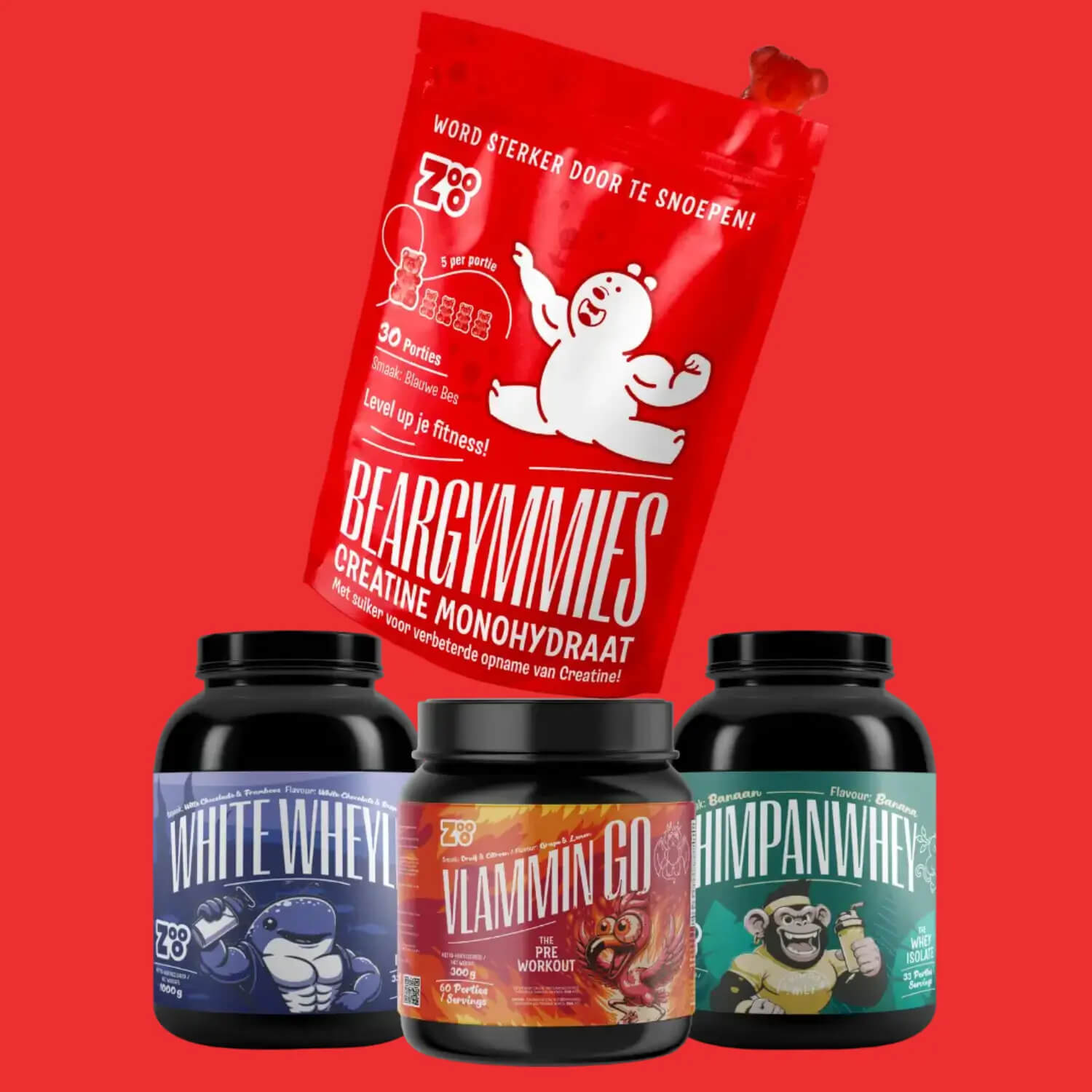
In Beargymmies® Performance+ you get per 5 gummies: Potassium 250 mg, Magnesium (bisglycinate) 100 mg, Creatine 5 g, Taurine 833 mg, exactly a practical top-up for the winter routine.
Practical schedules (cold-weather edition)
1) Short session 30–60 min (interval/bootcamp)
Before (60–30 min):
-
300–400 ml water (or tea) if thirsty; no “pre-loading”.
-
Warm-up 8–12 min (dynamic): hip/knee/ankle, progressive running drills, 2–3 accelerations.
During:
-
Only water needed; if sweating a lot a little sodium (splash of electrolytes).
After (0–30 min):
-
300–500 ml to thirst, light snack (carb + protein).
-
2–3 min controlled stretching of tight muscle groups (not aggressive).
Also read our blog for water/creatine in summer: here
2) Long session 60–120+ min (endurance/team)
Before (90–45 min):
-
300–500 ml water to thirst.
-
Layered clothing so you don't start cold and don't overheat.
During:
-
150–250 ml per 20–30 min (guideline; based on thirst/weather).
-
Electrolytes for >60–75 min or salty sweaters: sodium 300–600 mg/L (heavy sweaters/races: up to ± 700–1000 mg/L).
-
Small carbohydrates (e.g., 20–30 g/hour) for longer duration or high intensity.
After (0–2 hours):
-
Replace ~1–1.25× estimated fluid loss (don't force it).
-
Meal carb + protein + salt; potassium-rich foods (potato, legumes, dairy, avocado, fruit).
-
Beargymmies Performance+ fits well here as a low-stim recovery routine.
Beware of hyponatremia risk: overdrinking (a lot of water without sodium) = dangerous. Drink to thirst and add sodium for long/high sweat losses.

Acute cramp: what do you do now?
-
Stop and reduce tension on the muscle.
-
Passive stretch of the affected muscle (for calf: dorsiflexion).
-
Isometric light contraction/relaxation → releases the cramp.
-
Small sips of water/electrolyte drink.
-
Restart only when the muscle feels normal again.
Do’s & Don’ts (cold-weather checklist)
Do’s
-
Dynamic warm-up 8–12 min, progressive pace.
-
Drink to thirst; dose electrolytes for >60–75 min or salty sweaters.
-
Layering strategy: start warm, ventilate in time.
-
Nutrition first: potassium (potatoes, legumes, dairy, fruit), magnesium (nuts/seeds, whole grains, cocoa, leafy greens).
Don’ts
-
Don't overdrink (hyponatremia risk).
-
No “ice-cold start” without warming up.
-
No aggressive stretching in cold muscles.
-
No high loose potassium doses with kidney/medication issues.
Smart intake of K & Mg (practical)
-
Potassium (daily): aim for food-first (EFSA AI ~3500 mg/day for adults). Your +250 mg is a modest, safe top-up; ideal as a routine.
-
Magnesium (daily): 300–420 mg/day total (diet + supplements). Supplementing 100–200 mg elemental (e.g., bisglycinate) is a pragmatic basis.
-
Creatine 5 g/day helps delay fatigue via phosphocreatine buffering → indirectly fewer cramp-drivers (fatigue).
Medical note: for kidney disease, potassium-sparing medication (ACE inhibitor/ARB/spironolactone, etc.) → always consult a doctor first. Do not supplement potassium in high doses.
Conclusion
Cramps in the cold are multifactorial: fatigue, temperature, and fluid/electrolytes interact. With a warm-up, controlled hydration (to thirst, with sodium if needed), and a daily K/Mg base, you significantly reduce the risk. Consistency in routine (clothing, warm-up, nutrition) is your superpower.
Beargymmies ;)
👉 Beargymmies® Performance+ (sugar-free, vegan) – per 5 gummies: Creatine 5 g, Taurine 833 mg, Potassium 250 mg, Magnesium (bisglycinate) 100 mg. Easy to dose, low-stim, winter-proof.
Sources
-
Exercise-Associated Muscle Cramps (EAMC) – review: Schwellnus MP. Br J Sports Med. (2009)
https://bjsm.bmj.com/content/43/6/401 -
EAMC – aetiology, risk factors & management: Miller KC, et al. BMJ Open Sport & Exercise Medicine (2021)
https://bmjopensem.bmj.com/content/7/4/e001012 -
Fluid replacement – consensus: ACSM Position Stand “Exercise and Fluid Replacement” (2016 update/summary)
https://www.gssiweb.org/sports-science-exchange/article/sse-125-exercise-and-fluid-replacement -
Hyponatremia in sports: Hew-Butler T, et al. Clin J Sport Med. (2015)
https://journals.lww.com/cjsportsmed/Fulltext/2015/05000/Statement_of_the_Third_International.1.aspx
Hydration & Cold (dry air, reduced thirst, cold diuresis): Castellani JW & Tipton MJ. Compr Physiol (2015)
https://onlinelibrary.wiley.com/doi/10.1002/cphy.c140013
Potassium Adequate Intake (Europe): EFSA NDA Panel (2016)
https://efsa.onlinelibrary.wiley.com/doi/10.2903/j.efsa.2016.4592
Magnesium Factsheet (HP): NIH ODS
https://ods.od.nih.gov/factsheets/Magnesium-HealthProfessional/


