


CREATINE & FOOTBALL (2025)
First meters, repeated sprints & final sprint — where you win matches.
TL;DR (≤60 words)
Football requires repeated short sprints and direction changes. Creatine supports the ATP-PCr system: more punch, faster recovery between actions, and less decline in the final phase. Take 3–5 g daily. Early +0.5–1.0 kg is usually intramuscular (performance-friendly).
────────────────────────────────────────────────────────────────────
WHY IT MATTERS
Matches are decided in the first 1–5 meters, out of turns, and the final sprint. This is precisely where ATP-PCr provides energy. Creatine increases your phosphocreatine buffer, allowing you to maintain short bursts of effort longer and recover faster.
────────────────────────────────────────────────────────────────────
HOW IT WORKS (SHORT & CLEAR)
-
0–10 s peaks (first-step, short sprint, braking/reversing) = ATP-PCr-dominant.
-
Creatine increases PCr resynthesis → more consistent intensity during repeated sprints.
-
In practice: less decline in Q3–Q4, faster acceleration after winning the ball, more powerful final sprint.

────────────────────────────────────────────────────────────────────
PRACTICAL PER POSITION
Attackers
-
Winning zones: first-step down the line, 1-on-1 in the box, final sprint.
-
Drill (2×/week): 8–12× (12–15 s) cone-shuttle with ball / 90 s recovery. Focus: low hips, quick direction change.
Midfielders (two-way)
-
Winning zones: counter-switch, press-triggers, quality in last 15′.
-
Drill (1×/week): over-unders 6× (1′ above match threshold / 1′ below) + 6× (10 s all-out / 50 s).
Defenders
-
Winning zones: close-out first-step, recovery-sprints, clearing under pressure.
-
Drill (1×/week): 10× (15 s backpedal → 15 s sprint forward) / 90 s; plus sled push 6×15 m.
Goalkeepers
-
Winning zones: explosive lateral push, rebound-recovery, late-game.
-
Drill (2×/week): 6–10 rounds: 8–10 crease shuffles + 1 smother lunge; 1′ recovery.
────────────────────────────────────────────────────────────────────
DOSAGE, TIMING & HYDRATION
Dosage
-
3–5 g/day creatine monohydrate. Loading phase not needed.
-
Split-dosing for GI sensitivity: 2–3 g + 2–3 g with meals.
Timing
-
Choose the moment you can stick to.
-
After training with the first larger meal works practically; in the evening is also fine (creatine is not a stimulant).
Hydration & Electrolytes
-
Matches/indoors: sweat and heat → pay attention to sodium, magnesium, potassium (cramp prevention, neuromuscular function).
-
Performance+ (sugar-free) contains taurine + magnesium + potassium; useful for high volumes or hot weather.
Beargymmies® dosage
-
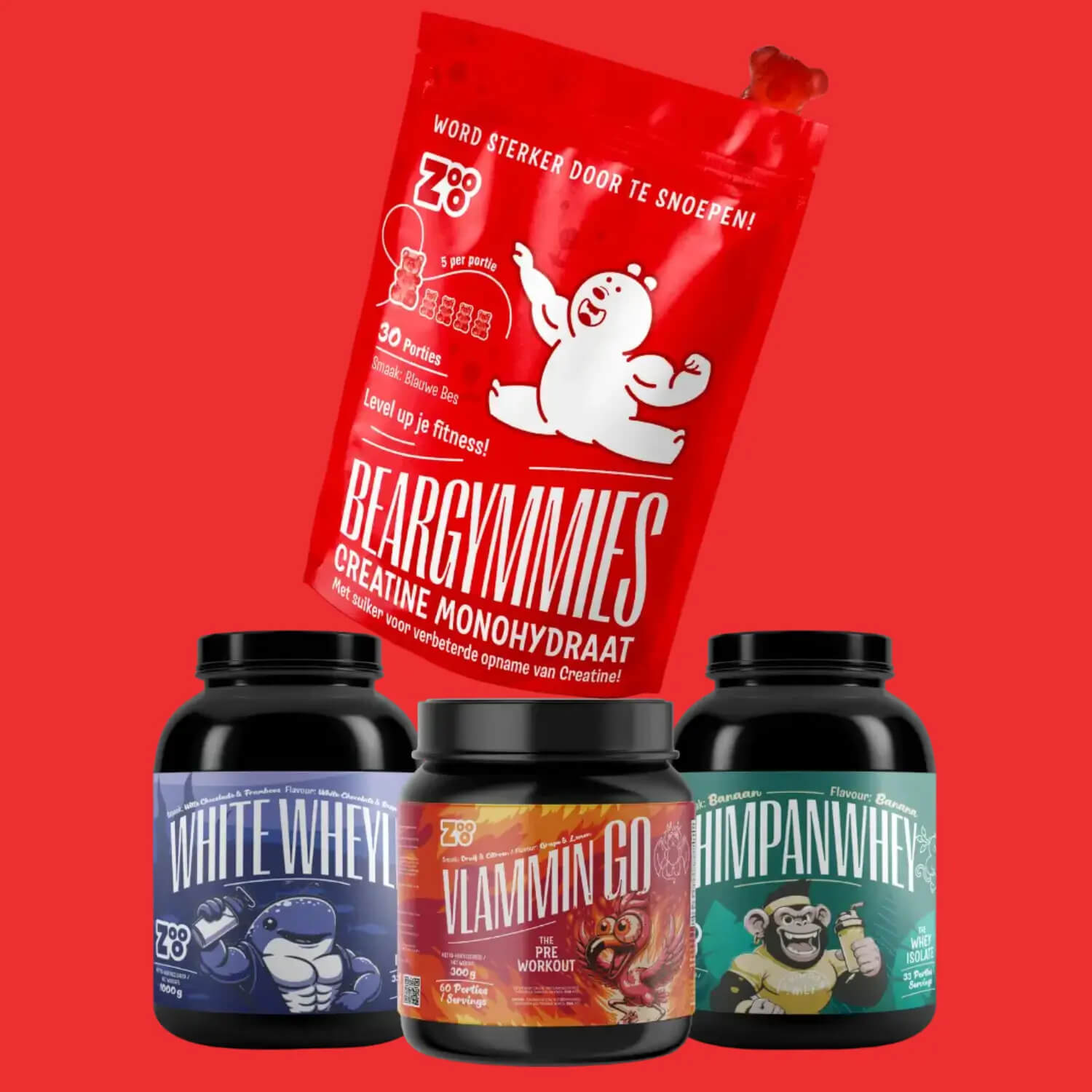
1,000 mg per gummy → 5 gummies = 5 g/day (150 gummies/bag).
-
Flavors: Original (blueberry) and Performance+ (sugar-free).
read here also about the dosage in our blog about creatine and dosage.
links to our gummies! :)
• Original: https://www.zooonutrition.com/products/creatine-monohydraat-gummie-beertjes-beargymmies
• Performance+ (sugar-free): https://www.zooonutrition.com/products/suikervrij-beargymmies-performance-plus-creatine-gummies-vegan
────────────────────────────────────────────────────────────────────
WEEKLY SCHEDULES (EXAMPLES, 2–4 WEEKS)
Repeated Sprint Ability (team-agnostic)
-
Mon: RSA 3 blocks → each block 6× (20 s hard / 40 s easy)
-
Wed: Strength 45–55′ (trap-bar deadlift 3×5; Bulgarian split squat 3×8/leg; RDL 3×6–8; core anti-rotation 3×12)
-
Sat: Small-sided games 3×8′ (high intensity), focus press-triggers
Speed-maintenance in final phase
-
Tue: 10×10 s all-out sprints / 2–3′ recovery
-
Thu: Over-unders 6× (1′ hard / 1′ easy) + agility ladder 3×2′
-
Sun: Mobility + recovery 30′
Daily: 3–5 g creatine + 1.6–2.2 g/kg/day protein.
────────────────────────────────────────────────────────────────────
DO’S & DON’TS (CHECKLIST)
DO’S
• 3–5 g/day (even on rest days)
• Combine with a meal or evening routine
• Split-dosing for GI sensitivity
• Protein 1.6–2.2 g/kg/day + electrolytes in heat/indoor
• Test adjustments outside of major matches
DON’TS
• Only take on match days
• Obsess over timing instead of consistency
• Loading phase right before a tournament
• Test a new stack on match day
• Ignore thirst signals → cramps/loss of quality
────────────────────────────────────────────────────────────────────
FREQUENTLY ASKED QUESTIONS (FAQ)
Does creatine make me heavier and slower?
Early +0.5–1.0 kg is often intramuscular and usually performance-friendly; test outside of tournaments.
Does creatine help with counters and pressing?
Yes, especially with repeated short sprints and quick reversals.
Loading phase needed?
Not needed. 3–5 g/day saturates in 2–4 weeks.
Is creatine safe?
For healthy adults and normal dosages: yes. Consult a doctor for conditions/medication.
Evening intake okay?
Yes, creatine is not a stimulant.
What about stomach/intestinal issues?
Take with/after a meal or use split-dosing.
Does it work on rest days?
Yes. Daily consistency maintains the PCr-pool.
Which form is best?
Monohydrate — strongest evidence and best €/5 g.
When will I notice effects?
Often within 2–4 weeks; pay attention to the final quarter and quality of sprints.
Which Beargymmies® do I choose?
Original or Performance+ (sugar-free); 5 gummies = 5 g/day.
────────────────────────────────────────────────────────────────────
CONCLUSION
Football is about meters 1–5 and quality until the final whistle. Creatine helps precisely there: first-step, repeated sprints and final phase. With 3–5 g daily, targeted RSA stimuli and smart hydration, you play more consistently when it counts.
────────────────────────────────────────────────────────────────────
Sources
-
Kreider, R. B., et al. (2017). ISSN Position Stand: Safety & efficacy of creatine. J Int Soc Sports Nutr, 14:18. https://doi.org/10.1186/s12970-017-0173-z
-
Antonio, J., et al. (2021). Common questions & misconceptions about creatine. J Int Soc Sports Nutr, 18:13. https://doi.org/10.1186/s12970-021-00412-w
-
Jäger, R., et al. (2017). ISSN Position Stand: Nutrient timing. J Int Soc Sports Nutr, 14:33. https://doi.org/10.1186/s12970-017-0189-3
-
EFSA Panel (2011). Health claim: Creatine ≥3 g/day improves performance in short, high-intensity. EFSA Journal, 9(7):2303. https://doi.org/10.2903/j.efsa.2011.2303
-
Bishop, D. (2010). An applied research model for the sport sciences (recovery between repetitions). Sports Medicine, 40(1):65–78. https://doi.org/10.2165/11319760-000000000-00000


