


TL;DR (≤60 words)
Vegans/vegetarians often have lower creatine stores, so supplementation generally yields more benefits: strength, repetitions, recovery, and sometimes cognitive gains. 3–5 g/day of creatine monohydrate is safe. Choose a form that you take every day (Beargymmies® are vegan/pectin).
────────────────────────────────────────────────────────────────────
WHY THIS MATTERS
Plant-based diets provide hardly any creatine (it's mainly found in meat/fish). As a result, your intramuscular creatine pool is often lower. Supplementation can lead to faster progress in the gym, better recovery, and potentially mental benefits in situations with high cognitive load or sleep deprivation.
────────────────────────────────────────────────────────────────────
WHAT IS CREATINE — AND HOW DOES IT WORK?
Creatine, with phosphate, forms phosphocreatine: your fast-energy buffer (ATP) for short, intense efforts (sprints, heavy sets, WOD spikes).
With daily supplementation, creatine and phosphocreatine stores increase, which you'll notice in practice as:
-
More repetitions at the same weight
-
Faster recovery between sets/sessions
-
Better training quality, thus easier progression
For vegans/vegetarians, the effect is often relatively greater because the baseline is lower.
────────────────────────────────────────────────────────────────────
WHAT DOES THE SCIENCE SAY?
-
Gold standard & safety — The ISSN position stand confirms: creatine monohydrate is the most researched, safe, and effective performance enhancer in healthy adults.
-
Vegans/vegetarians respond more strongly — Studies show lower baseline and greater increase in intramuscular creatine/phosphocreatine after supplementation, with more strength/work volume and sometimes additional lean mass when combined with strength training.
-
Cognitive benefit (context-dependent) — Especially with low intake or high mental load, there is evidence for better cognitive performance/reduced mental fatigue.
-
EFSA safety — ≥3 g/day of high-purity creatine is safe; large reviews find no adverse effects on kidneys/liver in healthy people at common doses.
-
Timing secondary — Consistency > timing: daily intake is more important than before/after training.
(Full sources: see “Sources”.)
────────────────────────────────────────────────────────────────────
PRACTICAL: HOW TO DO IT (VEGAN/VEGETARIAN)
Dosage
-
Daily 3–5 g creatine monohydrate.
-
No loading phase needed. With 3–5 g/day, your pool will be saturated after ±3–4 weeks. Loading (4×5 g/day, 5–7 days) is allowed, but mainly adds speed.
Timing
-
Choose a fixed time (breakfast, after training, or before bed). Consistency trumps timing.
Training & nutrition
-
Strength training 2–3×/week, 6–12 reps, 2–4 sets/muscle group, progressive overload.
-
Protein 1.6–2.2 g/kg/day. Mix plant-based sources (e.g., soy/pea/rice) for a complete amino acid profile.
-
Hydration thirst-driven; with heavy sweating, electrolytes (magnesium/potassium) are useful.
Choosing a form (and sticking with it)
The best creatine is the form you take daily. (whether that's powder or gummies :) read here, what suits you best)
-
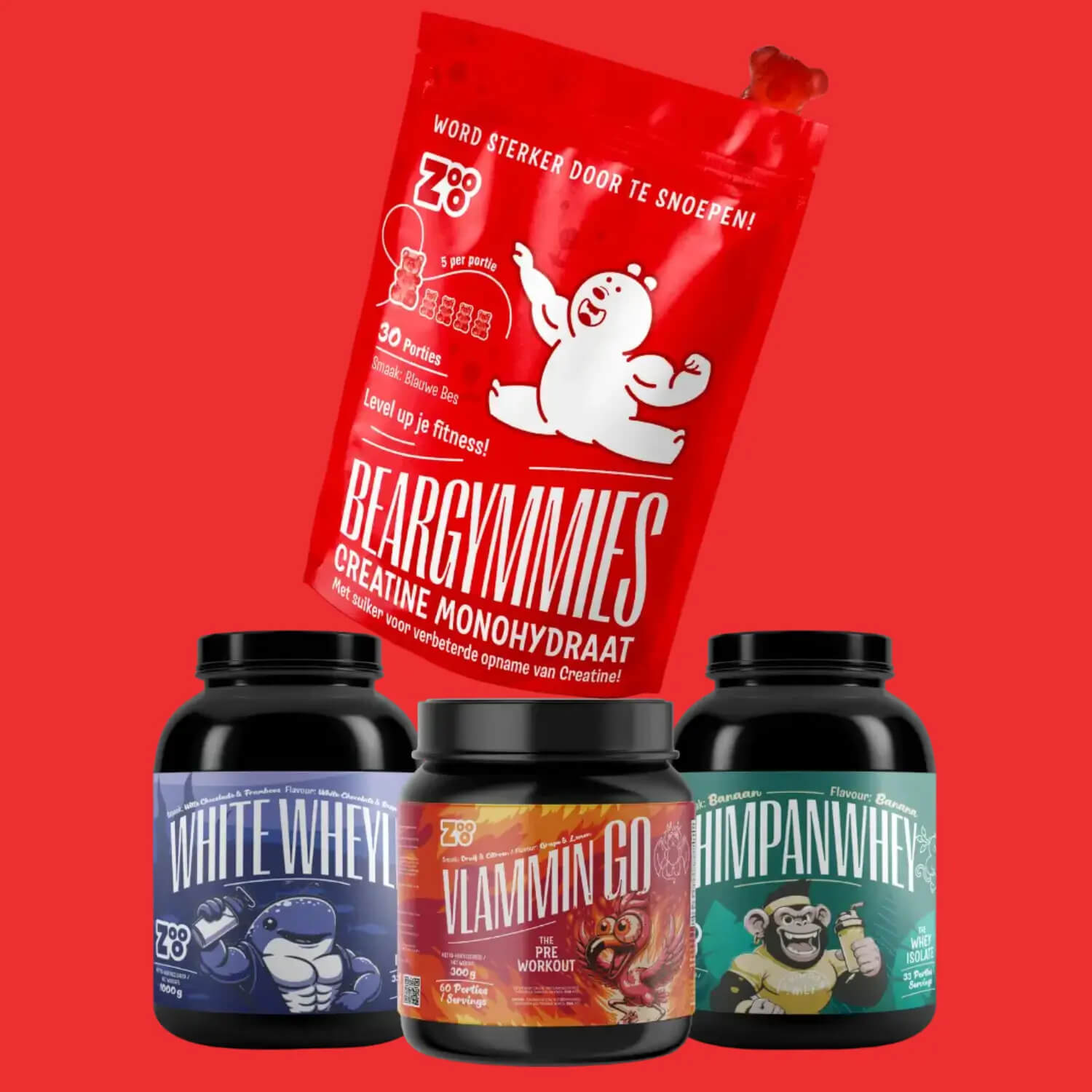
Beargymmies® are vegan (pectin) and make consistency easy:
-
Original (blueberry): 1,000 mg per gummy → 5 gummies = 5 g/day (150 gummies/bag).
-
Performance+ (sugar-free): creatine + taurine, magnesium, potassium — useful for WODs/heat/heavy sweating.
-
-
Transparent in €/5 g and CoA per batch. See: /creatine-gummies-price-costs

────────────────────────────────────────────────────────────────────
SCENARIOS (QUICK START)
1) Beginner (home or gym, 3×/week)
-
Full-body A/B.
-
Take 5 gummies with your breakfast.
-
Aim for +1 rep or +2.5 kg on major lifts per week.
2) HIIT/CrossFit
-
3–5 g/day.
-
On training days, after your session is fine, but mainly choose a fixed time.
3) Running/team sports
-
Test 3–5 g/day for 4 weeks.
-
Pay attention to sprints/hills and recovery time.
-
Small weight gain ↑ (fluid/glycogen in muscle) is performance-friendly.
────────────────────────────────────────────────────────────────────
DO’S & DON’TS (CHECKLIST)
DO’S
• 3–5 g every day
• 2–3× strength per week
• Fixed intake time (habit stacking)
• Protein & hydration in order
• Check CoA/purity and mg/5 g
DON’TS
• Don't only take it on training days
• No yo-yo dosing (forgetting = effect drops)
• Don't be surprised by 0.5–1.0 kg fluid/glycogen (intramuscular)
• Don't choose "exotic" forms over monohydrate
────────────────────────────────────────────────────────────────────
FREQUENTLY ASKED QUESTIONS (FAQ)
Does creatine work even if I eat vegan?
Yes. Because you get little creatine through food, you often respond extra positively to 3–5 g/day.
Is creatine itself vegan?
Yes. The ingredient creatine is vegan. Beargymmies® use pectin (no gelatin).
Do I need to load?
No. Daily 3–5 g also works; you'll notice clear effects after 2–4 weeks.
Is it safe?
Yes, for healthy adults and common dosages. Consult your doctor for conditions/medications.
Will I gain weight?
Sometimes 0.5–1.0 kg due to intramuscular fluid/glycogen. This supports performance and is not fat.
────────────────────────────────────────────────────────────────────
CONCLUSION
If you eat vegetarian or vegan, there's a good chance you'll benefit extra from creatine. With 3–5 g/day, you improve training efficiency, recovery, and strength. Make it easy and vegan-proof with Beargymmies® — and consistently work towards your goals.
Try Beargymmies® Performance+ (sugar-free) or Original and start today with 5 bears per day.
────────────────────────────────────────────────────────────────────
SOURCES
Kreider RB, et al. (2017). ISSN Position Stand: Safety and efficacy of creatine. J Int Soc Sports Nutr 14:18. https://doi.org/10.1186/s12970-017-0173-z
Burke DG, Chilibeck PD, et al. (2003). Vegetarian vs non-vegetarian response to creatine. J Appl Physiol 95(3):1108–1117. https://doi.org/10.1152/japplphysiol.00078.2003
Benton D, Donohoe R. (2011). The influence of creatine on cognition. Neuropharmacology 61(3): 507–514. https://doi.org/10.1016/j.neuropharm.2011.01.003
EFSA Scientific Panel (2004). Opinion on Creatine Monohydrate. https://efsa.onlinelibrary.wiley.com/doi/10.2903/j.efsa.2004.36
Antonio J, Ciccone V. (2013). Pre vs post workout creatine. J Int Soc Sports Nutr 10:36. https://doi.org/10.1186/1550-2783-10-36


