


Introduction
Type “is creatine dangerous?” into Google and you'll get millions of hits filled with horror stories: from "bloated face," "bald spots," to "kidney failure." Most of these are myths based on outdated or misinterpreted studies. In this deep-dive article, we debunk the eight most popular fables, present the real data, and offer practical tips – including links to our specialized blogs (hair loss, hydration, cutting) for further insight.
TL;DR (snippet-ready)
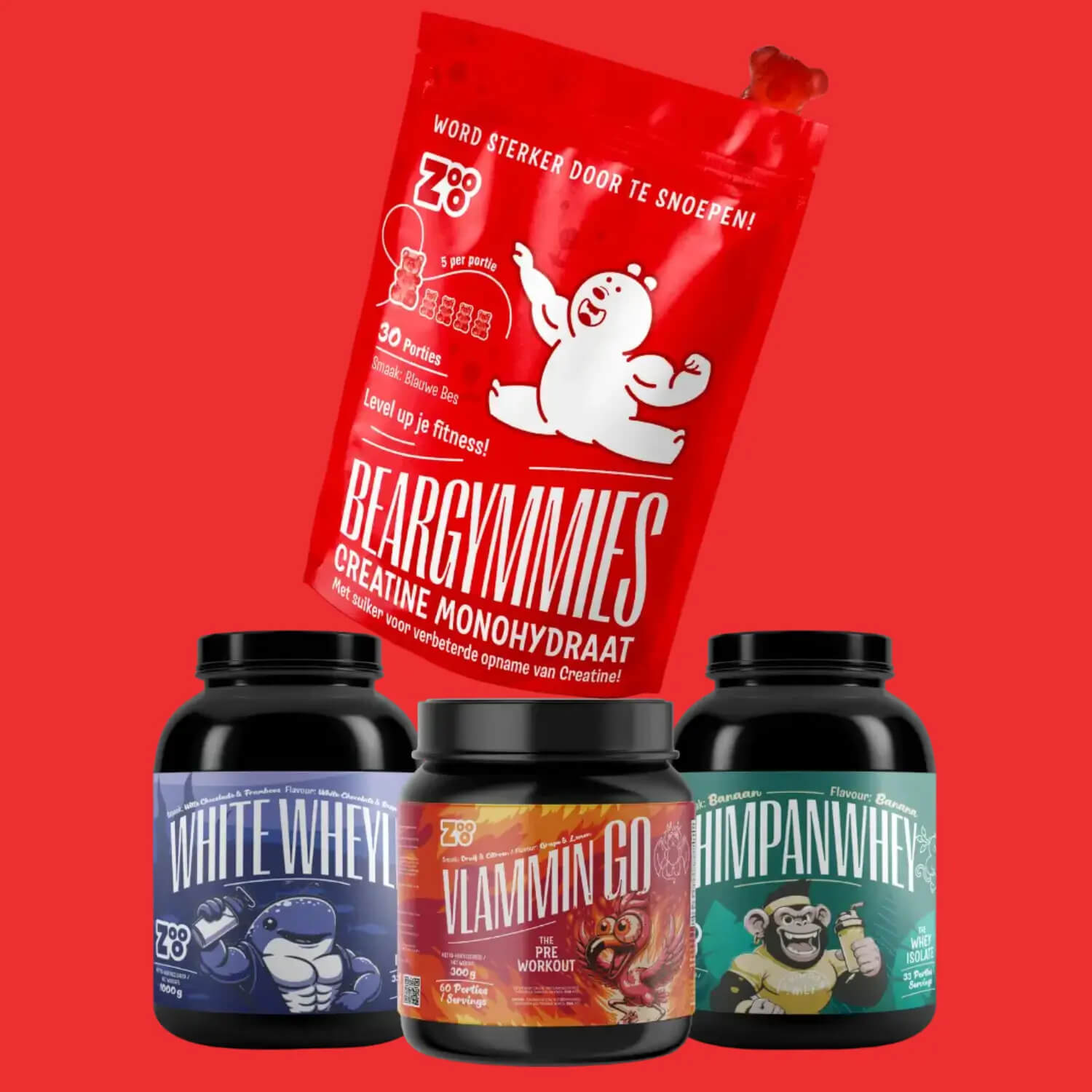
Creatine does NOT cause permanent water retention, hair loss, or kidney/liver damage. Daily 3-5g monohydrate (e.g., Beargymmies) has been safely researched for 30 years and primarily yields increased strength, muscle, and cognitive gains.
Introduction
Type “is creatine dangerous?” into Google and you'll get millions of hits filled with horror stories: from "bloated face," "bald spots," to "kidney failure." Most of these are myths based on outdated or misinterpreted studies. In this deep-dive article, we debunk the eight most popular fables, present the real data, and offer practical tips – including links to our specialized blogs (hair loss, hydration, cutting) for further insight.
Quick navigation
-
Myth 1 – Creatine makes you fat or causes subcutaneous water retention
-
Myth 2 – Creatine causes hair loss due to DHT
-
Myth 3 – Creatine stresses liver and kidneys
-
Myth 4 – Creatine only works if you load
-
Myth 5 – Creatine loses its effect when you stop
-
Myth 6 – Creatine causes cramps and dehydration
-
Myth 7 – Creatine is only for bodybuilders, not for endurance sports or women
-
Myth 8 – Creatine is a “chemical” steroid
Myth 1 – “You retain a lot of subcutaneous water and become puffy”
Fact: creatine draws intracellular fluid into the muscle cell (+ 0.5–1 kg in week 1) – not between skin and muscle.
Evidence: Kerksick 2007 showed +1 kg body water, but DEXA indicated 95% intracellular and no increase in subcutaneous fat.
Tip: Use our Hydration Guide to ensure you drink enough; physical appearance hardly changes.
Myth 2 – “Creatine makes you bald by increasing DHT”
Fact: one rugby study (2009) observed a temporary serum DHT peak at 25 g/d, but no hair loss. Modern RCTs (12 wk, 5 g/d) show no difference in DHT or hair density.
Read our specific blog Creatine & Hair Loss for the full deep dive.
Myth 3 – “Creatine is bad for liver & kidneys”
Fact: > 20 studies up to 30 g/d, some for 5 years, show normal creatinine clearance, AST/ALT, and GFR in healthy individuals.
Important note: people with existing kidney disease should discuss any supplementation with their doctor. (See Creatine + Medication – blog to follow.)
Myth 4 – “You MUST load, otherwise it won't work”
Fact: loading (4×5 g, 5 days) fills the muscle in ~5 days; a maintenance dose of 3–5 g/d fills the same tank in 3–4 weeks.
Practical: Beargymmies: 5 g/d = 5 gummies; choose what suits your schedule.
Myth 5 – “Stopping = all muscles disappear”
Fact: muscle creatine decreases slowly (≈ 2%/week), strength loss is minimal as long as you train & eat protein. No ‘catabolic crash’.
Myth 6 – “Creatine leads to cramps & dehydration”
Fact: RCTs in 39 °C heat show no increase in core temperature or cramps; some data even suggest improved plasma fluid volumes.
See our summer & winter hydration blogs.
Myth 7 – “Creatine is only for bodybuilders; women/endurance athletes don't benefit”
Fact: Female team athletes and vegan endurance athletes often see greater gains because their baseline muscle creatine is lower (Rae 2003, Burke 2003).
Read more: Creatine for Vegans & Creatine for Footballers.
Myth 8 – “Creatine is a harmful ‘chemical steroid’”
Fact: creatine is a natural amino acid derivative that your liver & kidneys already produce daily; anabolic steroids are hormone analogs with totally different mechanisms & risks.
WADA classifies creatine as a legal supplement.
Practical creatine guide (quick ref)
| Goal | Dose | Beargymmies | Extra tip |
|---|---|---|---|
| General maintenance | 3–5 g/d | 3–5 gummies | Take with meal |
| Rapid saturation (loading phase) | 20 g/d × 5 d | 4×5 gummies | With 50 g carbs |
| Cut / dry training | 5 g/d | 5 gummies | See cut-blog |
FAQ
Does creatine upset your stomach?
Max 5g at once is rarely problematic; split higher intake (≥10g) throughout the day.
Can I take creatine if I drink coffee?
Yes; see Creatine + Caffeine: combo boosts focus without negative interactions.
Does creatine break intermittent fasting?
Pure monohydrate and sugar-free gummies contain virtually no calories – negligible effect on autophagy.
Conclusion
30 years of literature makes it clear: most creatine fears are stubborn myths. A daily dose of 3–5 g Beargymmies delivers measurable strength, muscle, and cognitive gains, without hair loss, kidney stress, or a "puffy look." Be guided by data, not gym myths.
CTA
Debunk the myths yourself – Shop Beargymmies Creatine Gummies
Sources
-
# Myth / Claim in the blog Study (title & 1st author) PubMed-ID Link (abstract / full-text) 1 Strength & water weight mythcreatine preserves strength during a caloric deficit Creatine supplementation affects muscle creatine during energy restriction – Volek JS et al. 11194113 https://pubmed.ncbi.nlm.nih.gov/11194113/ 2 Hair loss / DHT myth ("rugby study") Three weeks of creatine monohydrate supplementation affects serum dihydrotestosterone but not hair parameters – van Boom K et al. 19741313 https://pubmed.ncbi.nlm.nih.gov/19741313/ 3 Kidney & liver damage / dehydration myth Common misconceptions about creatine supplementation – Kreider RB et al. 34872533 https://pubmed.ncbi.nlm.nih.gov/34872533/ (Open Access PDF) 4 “You have to load otherwise it won't work” Muscle creatine loading in men – Hultman E et al. 8884273 https://pubmed.ncbi.nlm.nih.gov/8884273/ 5 “Stopping = muscle loss” Creatine supplementation does not impair strength or lean mass after cessation – Rawson ES et al. 21373831 https://pubmed.ncbi.nlm.nih.gov/21373831/ 6 Cramps / dehydration myth (heat study) Effect of creatine loading on thermoregulation and sweating in a hot environment – Kilduff LP et al. 15560861 https://pubmed.ncbi.nlm.nih.gov/15560861/ 7 “Only for bodybuilders” – benefit in vegetarians/women Creatine supplementation improves performance in vegetarians – Burke DG et al. 14682584 https://pubmed.ncbi.nlm.nih.gov/14682584/ 8 Cognitive benefits / “chemical steroid” myth Oral creatine supplementation improves cognitive performance – Rae C et al. 14671204 https://pubmed.ncbi.nlm.nih.gov/14671204/ (Free PDF)


