


Introduction
Scroll through any sports forum and you'll see questions like “Is creatine HCL better than mono?” or “What is creatine nitrate?” There are now 10+ forms of creatine, but not every variant has been equally well researched or is equally beneficial. In this guide, we compare the three most popular forms – monohydrate, HCL, and nitrate – based on effectiveness, safety, solubility, and price. Spoiler: the classic still wins. Also check out our dosing guide and the blog Creatine gummies vs. powder for practical tips.
1 Why is there more than one form?
Manufacturers try to increase solubility, absorption, or marketing value. However, bioavailability in creatine primarily depends on the total daily dose, not on minor chemical tweaks. PMC
2 Comparison on one page
| Monohydrate | HCL | Nitrate | |
|---|---|---|---|
| Research | > 700 studies | ± 10 studies | ± 5 studies |
| Performance Evidence | ★★★★★ (strength, sprint, mass) BioMed CentralBioMed Central | ★★☆☆☆ (limited data) Naked Nutrition | ★★☆☆☆ (mixed results) PMC |
| Solubility | Good (0.4 g/100 ml) | Very good (4 g/100 ml) | Moderate |
| Cost/100 doses | ± €15 | ± €40 | ± €45 |
| Safety | Extensively proven BioMed Central | No long-term data | No long-term data |
| Availability | High | Medium | Low |
Important: the International Society of Sports Nutrition calls monohydrate “by far the most effective and safest form.” BioMed Central

3 Deep dive per form
3.1 Creatine monohydrate
-
Effectiveness: average +8% strength and +1–2 kg lean mass.
-
Safety: no serious side effects up to 30 g/d (5 years).
-
Water weight myth: +0.5–1 kg intracellular fluid is normal.
3.2 Creatine HCL
-
Claim: better solubility → fewer stomach issues.
-
Research: comparable phosphocreatine increase, no superior strength gains. PMC
-
Disadvantage: 2–3 × as expensive, little long-term data.
3.3 Creatine nitrate
-
Claim: combines creatine with nitrate for an extra NO boost.
-
Research: mixed; some studies show minimal peak power gains. PMC
-
Disadvantage: expensive, higher nitrate intake may be more stomach-sensitive.
4 Practical choice guide
Choose monohydrate if you want:
-
maximum proven performance gains;
-
don't want to spend unnecessary money;
-
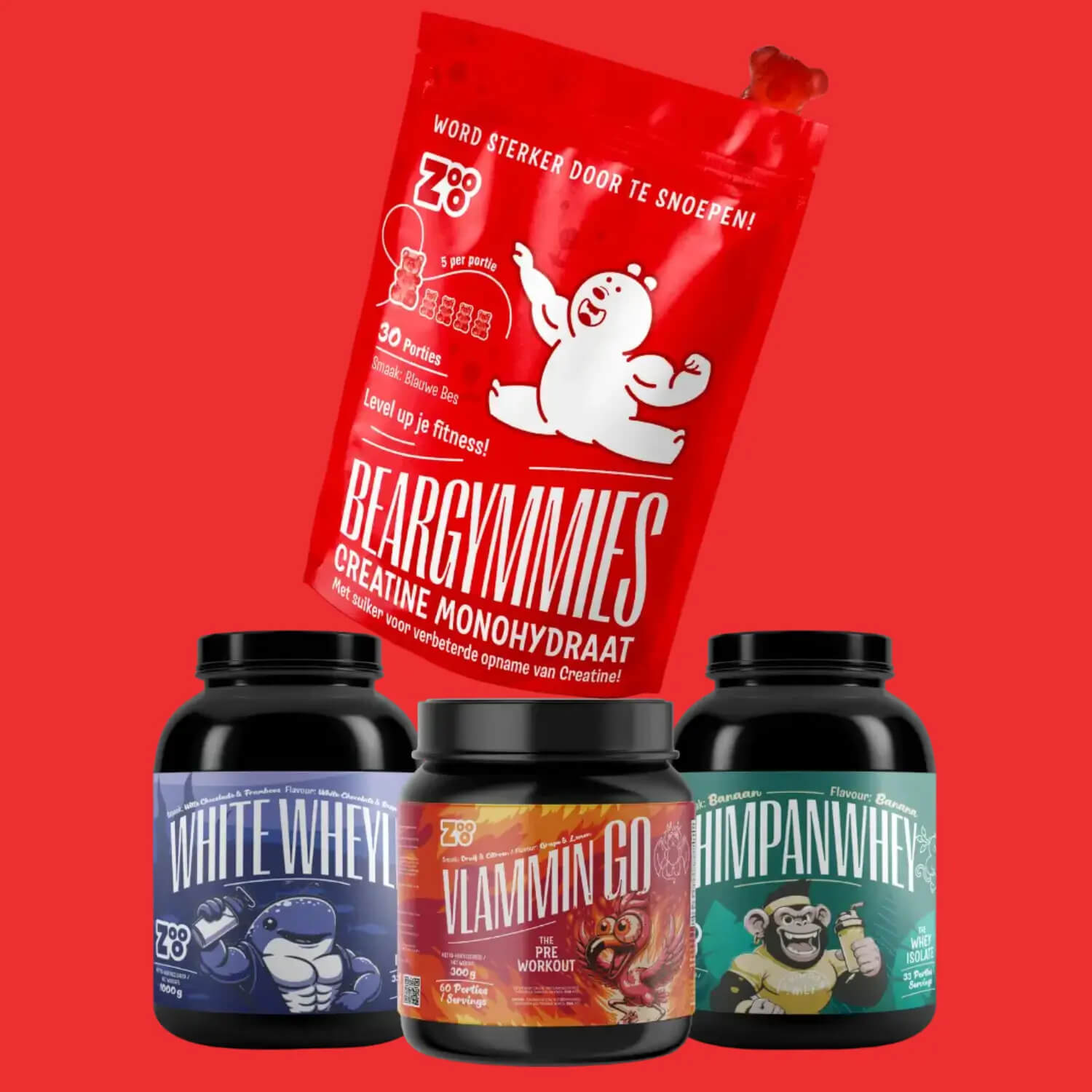
a safe & long-term researched form (Beargymmies uses 100% Creapure® monohydrate).
Possibly choose HCL if you:
-
have trouble with powder + water (gummies already solve this problem);
-
are willing to pay extra.
Choose nitrate (experiment) if you:
-
already use monohydrate and specifically want to test for an NO boost;
-
are free from GI issues and participate in short-duration events (sprints < 30 s).
5 FAQ (FAQPage Schema)
Is monohydrate bad for your kidneys?
No, dozens of studies show normal kidney values in healthy athletes.
Can I mix forms?
You can, but it incurs extra costs; the effect is not proven to be better.
Is “buffered” creatine (Kre-Alkalyn) even better?
No study shows more strength gains than monohydrate. PMC
Conclusion
After 30 years of research, creatine monohydrate remains king: cheap, effective, and safe. HCL is more soluble but expensive; nitrate is still uncertain. Beargymmies delivers pure monohydrate in an easy gummy form – no water, no clumps.
Choose wisely – get Beargymmies Creatine Gummies (100% monohydrate)!
Shop now →


