


TL;DR (≤ 60 words)
CrossFit requires repeated, short, intensive efforts. Creatine supports rapid ATP resynthesis and works when you take 3–5 g daily of creatine monohydrate (EU claim for ≥3 g/day). Loading phase is optional, not mandatory. Choose the form you can consistently take daily. Pay attention to mg per gummy and lab tests (CoA). See the WOD schedules below.
Sources: ISSN 2017; EFSA 2011.
Intro
WODs combine strength, sprint, gymnastics, and metcon. You perform in rounds or intervals with short rests. This is precisely where creatine excels: it helps with sequential, short-duration, high-intensity efforts—provided you reach the daily dose and remain consistent. This guide gives you evidence, dosages, practical schedules, and a checklist for training and competition days. (ISSN; EFSA)
What is creatine and how does it help with CrossFit?
Creatine increases the phosphocreatine stores in your muscle. This speeds up ATP resynthesis during actions lasting seconds: sprints, heavy sets, bursts in an EMOM/AMRAP. Result: more repetitions, better set quality, and faster recovery between short intervals. The molecule is the same in powder, capsule, or gummy; it's all about dose × consistency.
What does the science say? (briefly and honestly)
• ISSN position stand (2017): Creatine monohydrate is safe and effective for strength, sprint, and training adaptations.
• EFSA (EU claim, 2011): Performance enhancement with ≥3 g/day for sequential, short, high-intensity exercises.
• Timing/dosing (Naderi 2016): A loading phase (±20 g/day, 5–7 days) accelerates saturation; without loading, 3–5 g/day also works, just a bit slower.
• Team/interval sport evidence: Creatine often improves repeated sprint ability and strength; effects on long-duration components are context-dependent.
• Practice: Consistency over weeks determines the effect, not the exact timing of intake.
Practical: how to use creatine for CrossFit
Daily dosage
• 3–5 g/day creatine monohydrate (EFSA-compliant for ≥3 g/day).
• Gummies with 1,000 mg per gummy → 3–5 gummies/day.
• Also take on rest days; choose one fixed time (e.g., breakfast).
Loading phase (optional)
• 5–7 days: 20 g/day (4×5 g) → faster saturation.
• Thereafter, 3–5 g/day maintenance. Not mandatory; choose what you can sustain.
Daily schedules (real-life)
• Strength/skill day (e.g., 5×5 squat + skill): 3–5 g in the morning or after breakfast.
• Metcon/HIIT day (e.g., 5×(400 m run + thrusters)): 3–5 g well before the session (or standard in the morning).
• Mixed WOD (EMOM/AMRAP): Consistent daily intake more important than timing.
• Competition day (multiple WODs): Maintain daily 3–5 g + hydration/electrolytes; snack on carbs between heats.
Hydration & electrolytes
CrossFit boxes are hot; sweating = electrolyte loss. Ensure water + sodium/potassium during longer or hot sessions. This supports recovery and performance; creatine doesn't change your fluid needs, but good hydration remains smart.
Dosing by weight (round to whole gummies)
<70 kg → 3 g/day → 3 gummies
70–100 kg → 4 g/day → 4 gummies
100 kg → 5 g/day → 5 gummies
(Loading phase optional; evaluate after 3–4 weeks.)
Stacking with Performance+ (when useful?)
• Taurine: can support acute performance/recovery; task- and dose-dependent.
• Magnesium (bisglycinate): relevant for muscle function and fatigue.
• Potassium/electrolytes: with heavy sweating or hot box.
Core remains: creatine 3–5 g/day.
Gummies vs. powder (honestly)
• Effectiveness: equal at equal daily dose.
• Convenience/adherence: advantage gummies (on-the-go).
• €/5 g: advantage powder.
Choose the form you take daily; check mg per gummy and CoA.
Do’s & Don’ts (checklist)
Do
• Daily 3–5 g creatine monohydrate (EFSA-compliant).
• Take on rest days too; choose one fixed time.
• Hydration + electrolytes on hot/metcon days.
• Check CoA/lab test and mg per gummy.
Don’t
• Expect no EU performance claim at <3 g/day.
• Only take on training days.
• Only compare by price; calculate €/5 g and consider adherence.
• Start with too low doses during the buildup phase.
Conclusion:
For CrossFit, creatine provides the most benefit when you take 3–5 g daily and maintain that for weeks. A loading phase is optional. Combine with good hydration and smart electrolytes. Choose the form that supports your consistent routine.
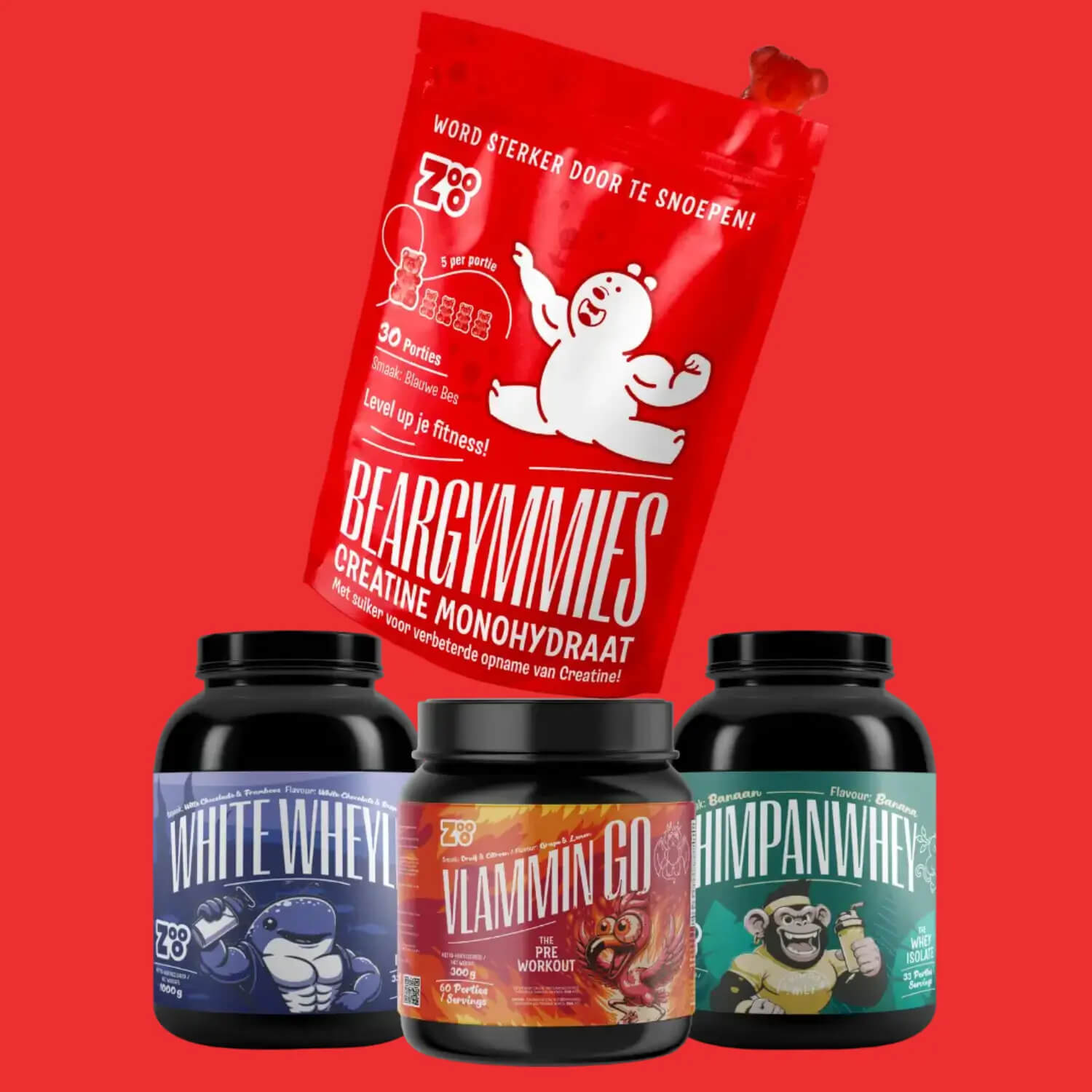
• Order Beargymmies® Performance+ (sugar-free, with taurine/magnesium/potassium) → https://www.zooonutrition.com/products/suikervrij-beargymmies-performance-plus-creatine-gummies-vegan
• Or choose Original Beargymmies® → https://www.zooonutrition.com/products/creatine-monohydraat-gummie-beertjes-beargymmies
Sources (clickable; old → new)
• EFSA NDA Panel (2011). Creatine — performance claim at ≥3 g/day. EFSA Journal. https://doi.org/10.2903/j.efsa.2011.2303
• Kreider RB, et al. (2017). ISSN position stand: Safety and efficacy of creatine. J Int Soc Sports Nutr. https://doi.org/10.1186/s12970-017-0173-z
• Naderi A, et al. (2016). Timing, optimal dose and intake duration of creatine. J Int Soc Sports Nutr. https://www.ncbi.nlm.nih.gov/pmc/articles/PMC5545206/
• Thomas DT, et al. (2016). Nutrition and Athletic Performance (Joint Position). Med Sci Sports Exerc. https://pubmed.ncbi.nlm.nih.gov/26891166/
• Branch JD. (2003). Effect of creatine supplementation on body composition and performance: a meta-analysis. Int J Sport Nutr Exerc Metab. https://doi.org/10.1123/ijsnem.13.2.198
• Mielgo-Ayuso J, et al. (2019). Dietary supplements and sports performance: a critical review. J Int Soc Sports Nutr. https://doi.org/10.1186/s12970-019-0322-7


